
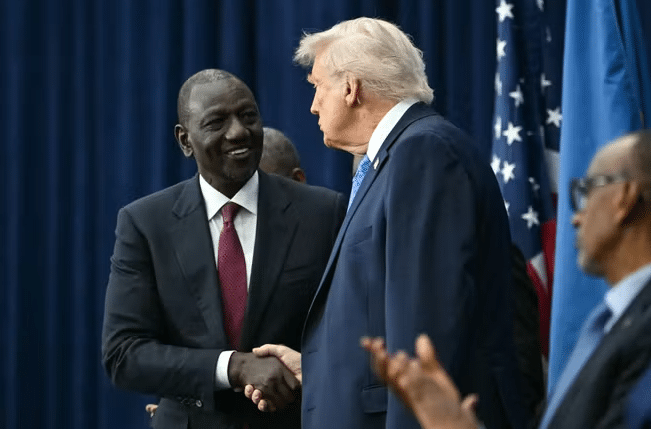
Kenya has made history by becoming the first African nation to enter a direct healthcare co-funding agreement with the United States under President Donald Trump’s new global health strategy. The groundbreaking deal, signed on December 4, 2025, marks a major shift in how international health funding is delivered to developing countries.
A Landmark Health Funding Partnership
Under the new agreement, the United States will invest over USD 1.6 billion into Kenya’s public healthcare system over the next five years. In return, Kenya will commit USD 850 million to strengthen essential services, including disease control, health infrastructure, and medical supply chains.
The investment aims to boost programs targeting HIV/AIDS, malaria, tuberculosis, and polio—areas where U.S. support has been critical for nearly two decades.
Shift From NGO-Led Aid to Direct Government Funding
For the first time, U.S. health funding will flow directly to the Government of Kenya, not through NGOs or third-party implementing partners. This aligns with Trump’s “America First Global Health Strategy,” which prioritizes government-to-government agreements to ensure accountability and local ownership.
According to U.S. officials, the new model is designed to reduce administrative waste and ensure more money reaches frontline clinics and public hospitals.
Why Kenya Was Chosen
Kenya’s strategic position in East Africa and its relatively stable governance made it a prime candidate for the first U.S. bilateral health funding pact of this kind. Nairobi has repeatedly advocated for predictable, long-term funding to strengthen its push toward Universal Health Coverage (UHC).
Kenyan officials hailed the deal as a “transformative moment” for the country’s health sector, noting that it will support digital health systems, disease surveillance, maternal health, and medical training.
Concerns Over Data Sharing and Transparency
Despite praise, the agreement has raised concerns among health experts and civil society groups. One key issue is the provision granting the U.S. access to certain types of infectious-disease data previously shared exclusively through the World Health Organization.
Critics argue that this shift could weaken multilateral cooperation and raise privacy concerns if data-handling protocols are not clearly defined.
What the Deal Means for Kenya’s Future
If implemented effectively, the U.S.–Kenya healthcare deal could:
- Strengthen national health financing
- Reduce dependency on foreign NGOs
- Improve patient outcomes in rural and underserved regions
- Position Kenya as a leading health hub in Africa
However, successful rollout will depend on transparent governance, strong oversight, and continued political commitment from both countries.
Conclusion
The historic U.S.-Kenya healthcare agreement represents a major turning point in global health cooperation. Kenya’s decision to embrace direct co-funding signals its ambition to modernize and take greater control of its national health priorities. As the first African country to adopt this model, Kenya may set a precedent for how future global health partnerships are structured.