
Kenya’s Deputy President Kithure Kindiki is emerging as one of the most visibly transformed figures in the country’s political landscape, shedding his long-held image as a soft-spoken academic for a more forceful and combative political persona.
Once known for his measured tone and constitutional citations, Prof Kindiki has increasingly adopted a sharper, confrontational style—an evolution political observers say reflects the pressures and expectations that come with the Deputy President’s office.
High-Stakes Politics Force a New Tone
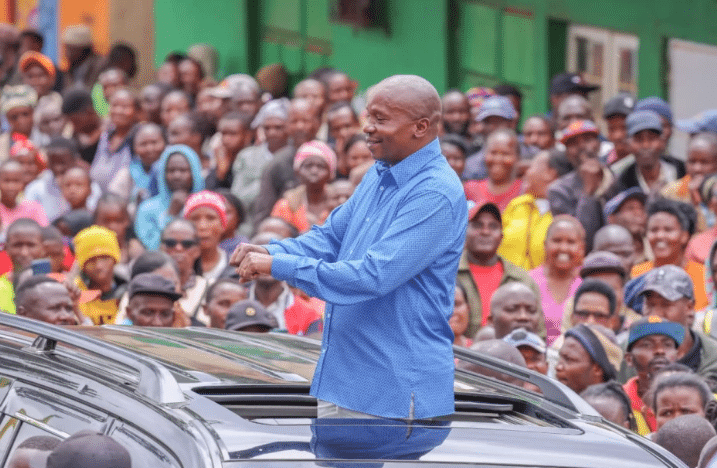
The shift was most evident during the recent Mbeere North by-election, where Kindiki led the ruling United Democratic Alliance (UDA) campaign with uncharacteristic intensity. Gone was the reserved law professor; in his place stood a political enforcer, openly challenging rivals and taking direct aim at allies of his predecessor, Rigathi Gachagua.
Political historians have long argued that deputy leaders are often compelled to play dual roles—either as loyal supporters or aggressive defenders of power. In Kindiki’s case, the Mbeere contest appears to have accelerated that transition.
A Test of Authority and Legacy
For Kindiki, the by-election was more than a routine political contest. A loss would have been interpreted as a lingering shadow of Gachagua’s influence, particularly after the former deputy president’s public criticism of him. Winning, therefore, became both a political necessity and a personal statement.
Addressing crowds, Kindiki delivered pointed remarks that underscored his new approach, declaring that political dominance in the Mount Kenya region was no longer the preserve of a single individual and insisting that performance—not noise—would define leadership going forward.
From ICC Defense to the Center of Power
Kindiki’s political journey has been closely intertwined with President William Ruto’s rise. He was a key legal figure during the International Criminal Court (ICC) cases, serving as defense counsel for Ruto, and later remained a trusted insider within the Kenyatta–Ruto political axis.
Although he briefly fell out of favor during the fallout between former President Uhuru Kenyatta and Ruto—losing his position as Senate Deputy Speaker—Kindiki stayed loyal to Ruto, playing a pivotal behind-the-scenes role as Chief Agent during the tense 2022 General Election tally at the Bomas of Kenya.
Interior Docket and a Sharper Edge
His appointment as Interior Cabinet Secretary marked another turning point. Traditionally one of the most powerful and sensitive ministries, the role demanded firmness and decisiveness. Kindiki swapped academic robes for security briefings, a move that further hardened his public posture.
Following Gachagua’s impeachment, Kindiki ascended to the Deputy President’s seat and moved swiftly to assert authority, publicly reprimanding senior officials he accused of undermining government unity.
A New Political Identity Takes Shape
The Mbeere North campaign may have been the clearest signal yet of Kindiki’s political metamorphosis. No longer content with quiet persuasion, he embraced grassroots mobilization, direct confrontation, and unapologetic rhetoric.
From the lecture halls of constitutional law to the rough terrain of electoral politics, Kithure Kindiki has traded academic restraint for political muscle, positioning himself as a central power broker in Kenya’s evolving political order.