
Typhoon Kalmaegi Heads West After Deadly Impact in Southeast Asia
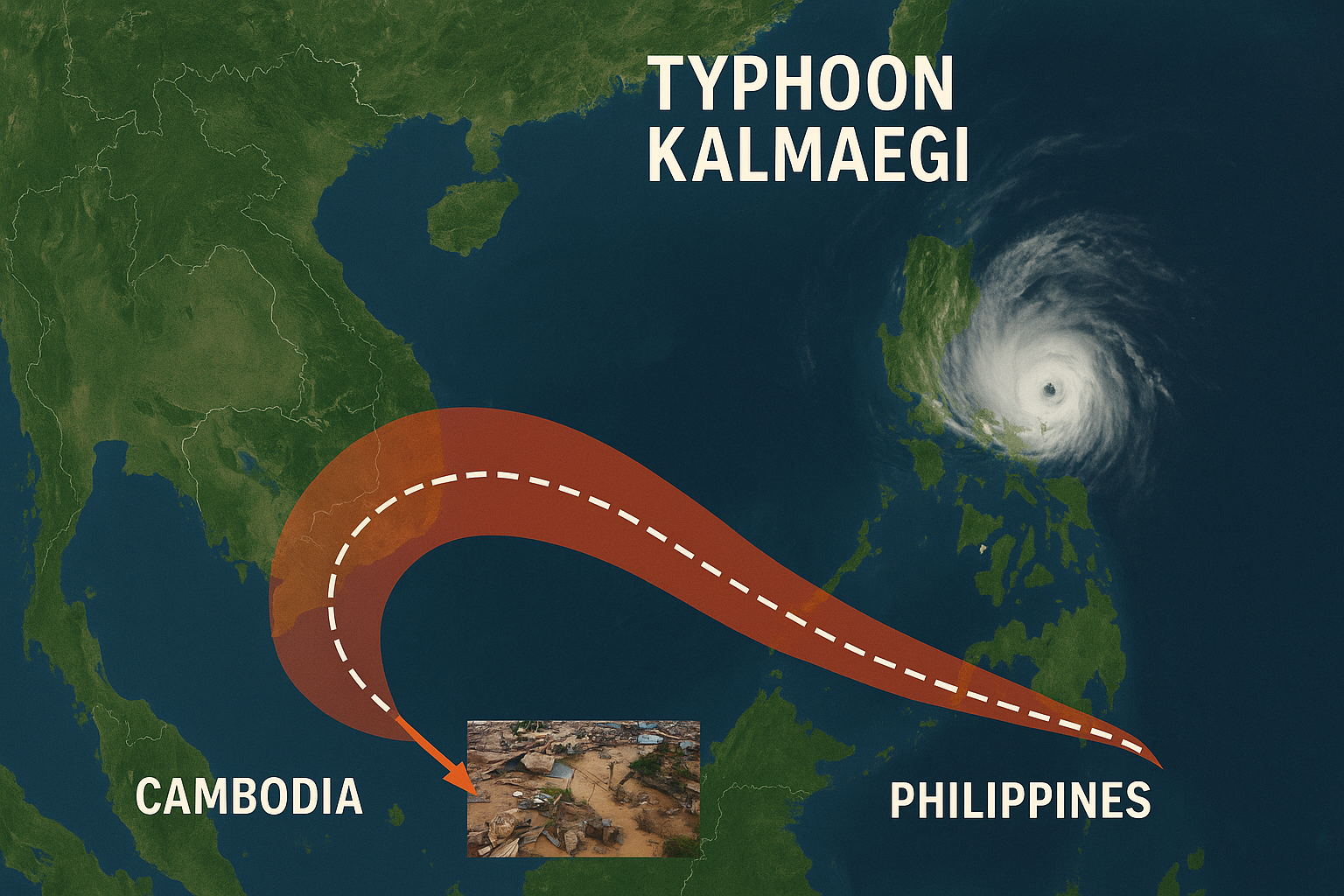
Typhoon Kalmaegi continues its destructive journey across Southeast Asia, moving west toward Cambodia and Laos after claiming at least 193 lives in the Philippines and Vietnam, according to official reports on Friday.
The storm, packing winds of up to 149 km/h (92 mph), slammed into Vietnam’s central coast overnight, uprooting trees, tearing roofs off homes, and scattering debris across towns and highways. Thousands of residents took refuge in schools and public shelters as soldiers were deployed for rescue operations.
Vietnam Battles Floods and Damage as Storm Moves Inland
Authorities in Vietnam have warned of severe flooding in low-lying and mountainous regions. Central Vietnam, which has endured record rainfall over the past week, saw 50 additional deaths due to flooding before Kalmaegi made landfall.
More than 260,000 soldiers, 6,700 vehicles, and six aircraft were mobilized to support emergency efforts. Several airports, highways, and ports were closed, while hundreds of thousands of residents were evacuated ahead of the storm.
After landfall, heavy rainfall and strong winds battered Dak Lak province, located about 350 km northeast of Ho Chi Minh City, leaving homes collapsed or submerged. Vietnamese Prime Minister Pham Minh Chinh chaired an emergency meeting, urging swift relief:
“We must reach isolated areas and ensure people have food, water, and essential supplies. No one should be left hungry or cold,” he said.
Philippines Declares State of Calamity After Massive Losses
Before striking Vietnam, Typhoon Kalmaegi — known locally as Tino — devastated large parts of the Philippines, where 188 people were killed and 135 remain missing.
The storm unleashed a month’s worth of rain in just 24 hours, triggering deadly mudslides and flash floods. In Cebu, a major tourist destination, vehicles were swept through streets as torrents of water and debris engulfed residential areas.
Entire communities, particularly in Talisay City, were wiped out. Survivor Mely Saberon recounted losing her home completely:
“We don’t have any home anymore. We weren’t able to salvage anything. We’ve experienced many typhoons before, but this one was different.”
Philippine President Ferdinand Marcos Jr. declared a state of emergency nationwide, citing the scale of destruction, loss of lives, and disruption to livelihoods.
Cambodia and Laos on High Alert
As Typhoon Kalmaegi moves westward, Cambodia and Laos are bracing for heavy rainfall and potential flooding in the coming days.
Authorities have urged residents in flood-prone areas to move to higher ground and prepare emergency supplies, warning that rivers could overflow due to continuous rain.
Meteorological agencies are monitoring the storm’s strength, which may weaken slightly as it crosses land but remains capable of causing significant damage through flooding and landslides.
A Growing Pattern of Extreme Weather
Kalmaegi’s destruction underscores the increasing vulnerability of Southeast Asia to stronger and more frequent tropical storms, a trend scientists link to climate change and warming ocean temperatures.
Experts warn that the region must invest in resilient infrastructure, improve early warning systems, and strengthen disaster preparedness to minimize future losses.